
They Are Not Too Young For Sport
4 minutes
Ollie from Oxford Explorers
Learning

What running, catching, kicking and balancing are really teaching your child
Watch preschoolers with a ball and something interesting happens.
One chases it in the wrong direction. Another tries to kick it before it stops bouncing. A third celebrates a World Cup victory, although nobody knows the game or score.
It looks like fun. It is.
Beneath the laughter, children are building physical, cognitive and social foundations.
Early childhood sport needs movement, experimentation and enjoyment, without adult expectations of league tables, fixed positions or hours of drills.[4]
Start with movement, not competition
Young children are still developing the attention, coordination and emotional maturity for complex rules and competitive games.[1]
They can still enjoy play-based sport.
Running, jumping, throwing, catching, kicking and balancing build fundamental movement skills. Research involving thousands of preschoolers shows that structured programmes can improve these skills.[2] Some studies also suggest benefits for working memory, self-control and social-emotional skills, although findings vary.[3]
At three or four, the goal is confident, comfortable movement.
Sport gives children more ways to succeed
A child uninterested in football may love throwing, swimming or obstacle courses. Children need opportunities to discover what they enjoy.
Variety offers achievement, friendship and belonging, sometimes through an unexpected talent.
As children form beliefs about themselves, these experiences matter:
“I can do this.”
“I’m getting better.”
“Can I try again?”
They build confidence and the resilience to try again.
The brain is exercising too
Catching a ball keeps a young brain busy.
Watch its path. Judge its speed. Position the body. Move the hands. Remember the instruction. Avoid the enthusiastic friend approaching from the other direction.
Team activities add listening, turn-taking and cooperation. Children learn simple rules and adjust when someone else has a different idea.
These experiences offer practice in communication and problem-solving.
Otters are naturally gifted at aquatic sports. For everything else, we also need practice.

Learning to win, and not to win
Sport offers manageable encounters with something adults recognise: things do not always go to plan.
The ball misses the target.
Someone else gets there first.
The team loses the game.
With supportive adults, these become opportunities to learn.
Children practise managing disappointment, celebrating others and trying again. Repetition helps them experience improvement and develop perseverance and good sportsmanship.
Those lessons travel beyond the sports field.
What about simply playing outside?
Free play matters. Climbing, inventing games and exploring outdoors are valuable experiences.
Structured activities offer something complementary:
Demonstration and repeated practice can help children learn to catch, control a ball or throw towards a target.
Research suggests structured programmes can improve some movement skills, particularly running and jumping, more than unstructured activities alone.[2]
Children benefit from the playground and from well-designed sport.
What Sports looks like at Oxford Explorers
At Oxford Explorers, Sports is part of every child’s week.
Activities reflect children’s age and development. Younger children might practise balance, coordination and following a signal; older children can explore more complex ball skills, movement sequences and teamwork.
Each child is encouraged to explore, practise and improve from their own starting point.
Most importantly, they genuinely love it.
Enjoyment matters as children begin forming their relationship with physical activity. Friendship and achievement can help them feel that movement is for them.
Physical development belongs alongside creative exploration and purposeful play in our wider curriculum, building confidence for what comes next.
Ollie’s takeaway
Do not worry about whether your three-year-old is “good at sport”.
Ask whether they are running, balancing, throwing, catching, trying, laughing and growing more confident in their bodies.
The medals can wait.
Discovering that movement is fun is already a wonderful victory.
Let’s Explore Together! 🦦
Sources and further reading
[1] American Academy of Pediatrics. Is Your Child Ready for Sports?
[5] Oxford Explorers. A Curriculum That Protects Childhood and Prepares Children for What Comes Next.
At Oxford Explorers, weekly age-appropriate Sports helps nurture confident, curious and capable young learners.
Book an Explorer Day to see learning in action at our Braddell or Bayshore centre.
Previous
Play Is Development: What Your Child Is Really Learning
Next
Technology Without Screens: What Children Learn When They Build Things
More Related Articles

A Curriculum That Protects Childhood and Prepares Children for What Comes Next
How Oxford Explorers blends the UK EYFS and Singapore's NEL framework into one learning journey, from Playgroup to K2. Joyful play with purposeful progression.
4 minutes

Why Outdoor Play Belongs at the Heart of Preschool
Movement, confidence, social judgement and healthier eyes. Why daily outdoor play is central at Oxford Explorers Singapore, plus four questions to ask any preschool.
4 minutes
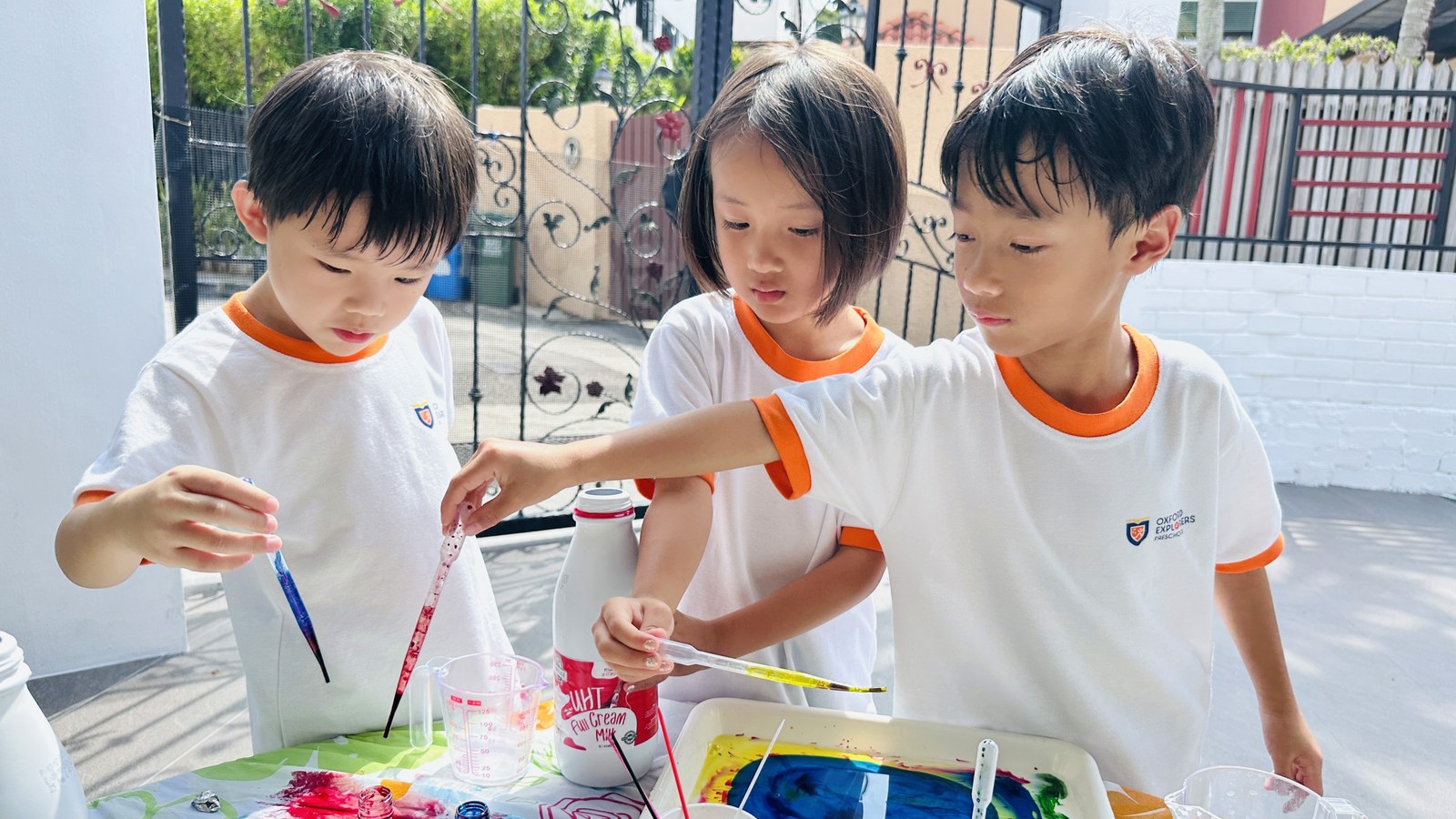
Play Is Development: What Your Child Is Really Learning
Purposeful play builds language, executive function and confidence. What Singapore's NEL framework means by purposeful play, and how to protect play at home.
4 minutes

Technology Without Screens: What Children Learn When They Build Things
Preschool technology does not mean more screen time. How tinkering, making and 3D printing build computational thinking, spatial skills and persistence.
5 minutes

Copyright © 2026 Oxford Explorers Preschool All Rights Reserved | Terms and Conditions | Privacy Policy
Copyright © 2026 Oxford Explorers Preschool | All Rights Reserved
Terms and Conditions | Privacy Policy
They Are Not Too Young For Sport
4 minutes
Ollie from Oxford Explorers
Learning
What running, catching, kicking and balancing are really teaching your child
Watch preschoolers with a ball and something interesting happens.
One chases it in the wrong direction. Another tries to kick it before it stops bouncing. A third celebrates a World Cup victory, although nobody knows the game or score.
It looks like fun. It is.
Beneath the laughter, children are building physical, cognitive and social foundations.
Early childhood sport needs movement, experimentation and enjoyment, without adult expectations of league tables, fixed positions or hours of drills.[4]
Start with movement, not competition
Young children are still developing the attention, coordination and emotional maturity for complex rules and competitive games.[1]
They can still enjoy play-based sport.
Running, jumping, throwing, catching, kicking and balancing build fundamental movement skills. Research involving thousands of preschoolers shows that structured programmes can improve these skills.[2] Some studies also suggest benefits for working memory, self-control and social-emotional skills, although findings vary.[3]
At three or four, the goal is confident, comfortable movement.
Sport gives children more ways to succeed
A child uninterested in football may love throwing, swimming or obstacle courses. Children need opportunities to discover what they enjoy.
Variety offers achievement, friendship and belonging, sometimes through an unexpected talent.
As children form beliefs about themselves, these experiences matter:
“I can do this.”
“I’m getting better.”
“Can I try again?”
They build confidence and the resilience to try again.
The brain is exercising too
Catching a ball keeps a young brain busy.
Watch its path. Judge its speed. Position the body. Move the hands. Remember the instruction. Avoid the enthusiastic friend approaching from the other direction.
Team activities add listening, turn-taking and cooperation. Children learn simple rules and adjust when someone else has a different idea.
These experiences offer practice in communication and problem-solving.
Otters are naturally gifted at aquatic sports. For everything else, we also need practice.
Learning to win, and not to win
Sport offers manageable encounters with something adults recognise: things do not always go to plan.
The ball misses the target.
Someone else gets there first.
The team loses the game.
With supportive adults, these become opportunities to learn.
Children practise managing disappointment, celebrating others and trying again. Repetition helps them experience improvement and develop perseverance and good sportsmanship.
Those lessons travel beyond the sports field.
What about simply playing outside?
Free play matters. Climbing, inventing games and exploring outdoors are valuable experiences.
Structured activities offer something complementary:
Demonstration and repeated practice can help children learn to catch, control a ball or throw towards a target.
Research suggests structured programmes can improve some movement skills, particularly running and jumping, more than unstructured activities alone.[2]
Children benefit from the playground and from well-designed sport.
What Sports looks like at Oxford Explorers
At Oxford Explorers, Sports is part of every child’s week.
Activities reflect children’s age and development. Younger children might practise balance, coordination and following a signal; older children can explore more complex ball skills, movement sequences and teamwork.
Each child is encouraged to explore, practise and improve from their own starting point.
Most importantly, they genuinely love it.
Enjoyment matters as children begin forming their relationship with physical activity. Friendship and achievement can help them feel that movement is for them.
Physical development belongs alongside creative exploration and purposeful play in our wider curriculum, building confidence for what comes next.
Ollie’s takeaway
Do not worry about whether your three-year-old is “good at sport”.
Ask whether they are running, balancing, throwing, catching, trying, laughing and growing more confident in their bodies.
The medals can wait.
Discovering that movement is fun is already a wonderful victory.
Let’s Explore Together! 🦦
Sources and further reading
[1] American Academy of Pediatrics. Is Your Child Ready for Sports?
[5] Oxford Explorers. A Curriculum That Protects Childhood and Prepares Children for What Comes Next.
At Oxford Explorers, weekly age-appropriate Sports helps nurture confident, curious and capable young learners.
Book an Explorer Day to see learning in action at our Braddell or Bayshore centre.
Previous
Play Is Development: What Your Child Is Really Learning
Next
Technology Without Screens: What Children Learn When They Build Things
More Related Articles
A Curriculum That Protects Childhood and Prepares Children for What Comes Next
How Oxford Explorers blends the UK EYFS and Singapore's NEL framework into one learning journey, from Playgroup to K2. Joyful play with purposeful progression.
4 minutes
Why Outdoor Play Belongs at the Heart of Preschool
Movement, confidence, social judgement and healthier eyes. Why daily outdoor play is central at Oxford Explorers Singapore, plus four questions to ask any preschool.
4 minutes
Play Is Development: What Your Child Is Really Learning
Purposeful play builds language, executive function and confidence. What Singapore's NEL framework means by purposeful play, and how to protect play at home.
4 minutes
Technology Without Screens: What Children Learn When They Build Things
Preschool technology does not mean more screen time. How tinkering, making and 3D printing build computational thinking, spatial skills and persistence.
5 minutes
Copyright © 2026 Oxford Explorers Preschool | All Rights Reserved
Terms and Conditions | Privacy Policy